Computer-controlled liquid feeding for profitable pig production
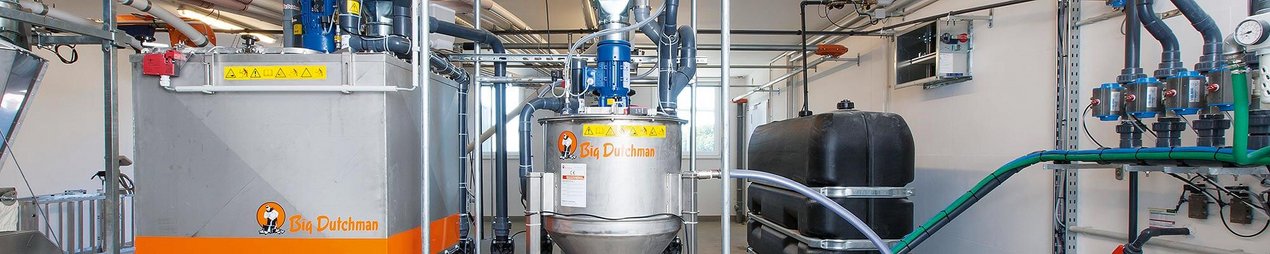
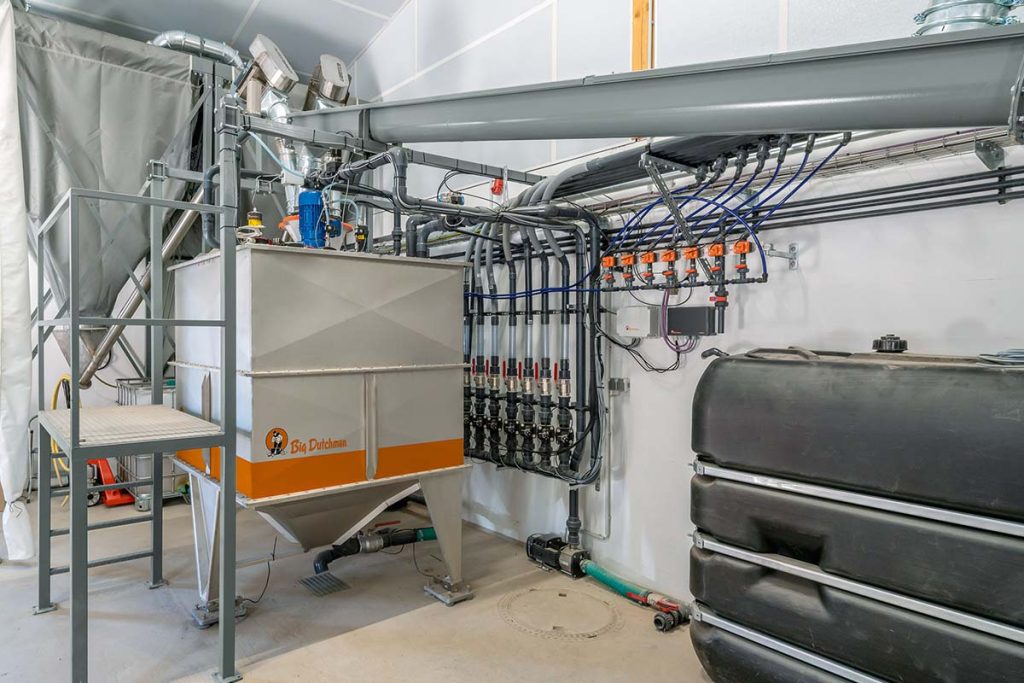
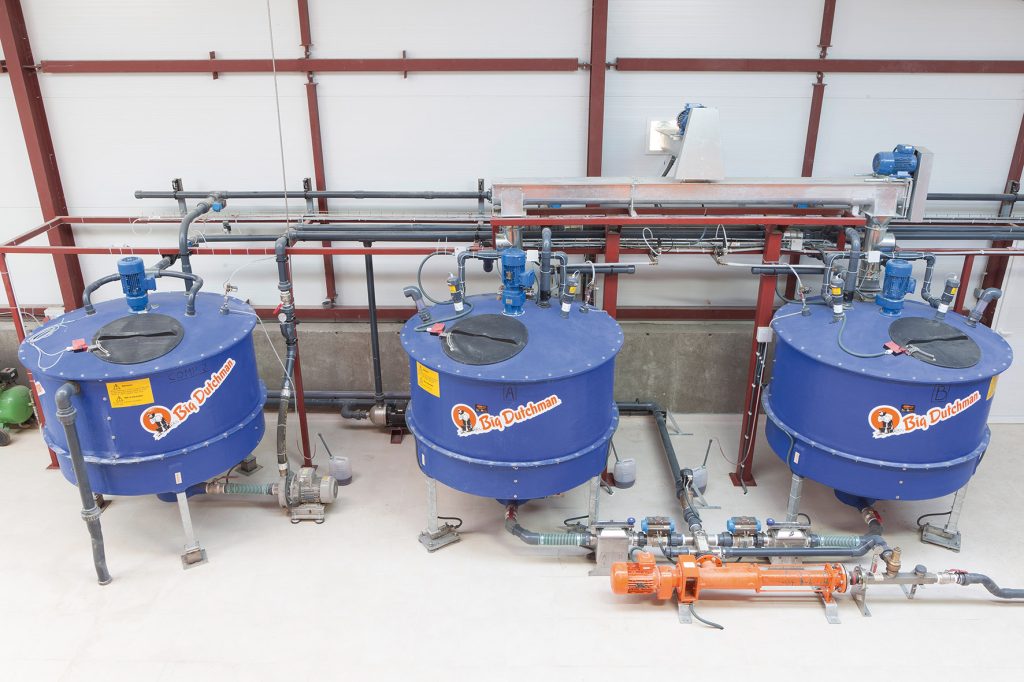
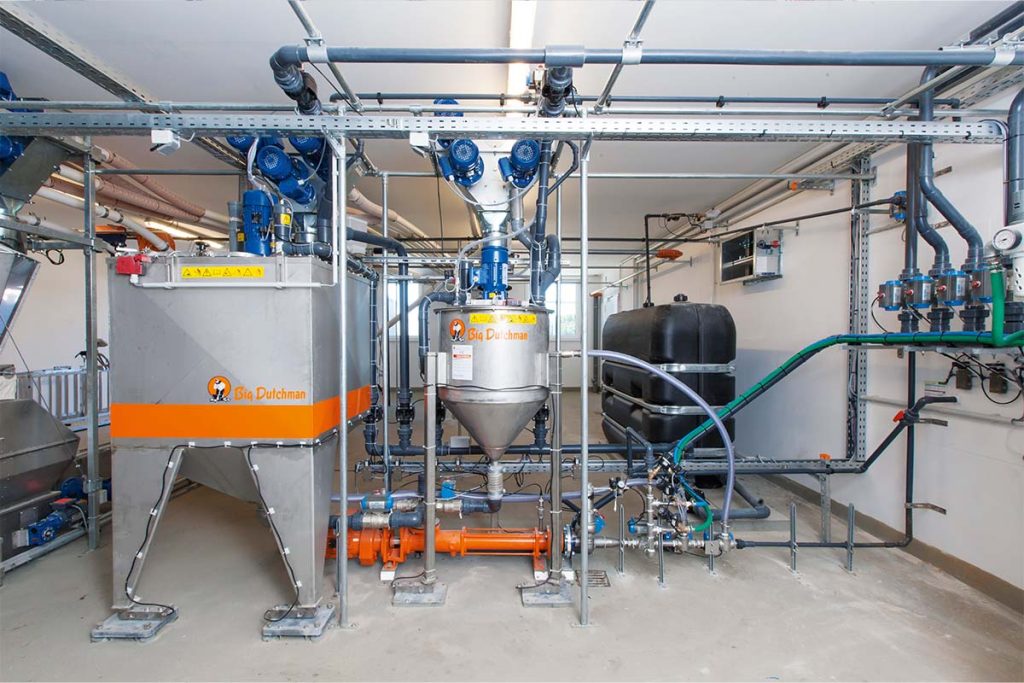
The Big Dutchman HydroMix liquid feedingpro is a very flexible modular system for feeding sows, piglets and fattening pigs. Each system is adapted exactly to the batch to be served and to the building's characteristics. HydroMixpro is especially recommended if economical feed components can be used, such as whey, food-industry by-products or CCM (Corn-Cob-Mix).
In order to meet our customers' requirements at all times, our technicians work on the continuous development of the system. For this reason we offer completely different systems under the HydroMix conceptpro.
Key advantages:
Preparation of needs-based recipes from a wide variety of individual components → high daily weight gain with low feed costs;
computer-based feed management and farm management → time savings and high operational reliability;
modular, flexible construction system for large and small installations → economical possibility of expanding the system;
equally suitable for group or individual feeding;
low operating costs, long service life.
Tailor-made systems for your farm
If the pigs are to receive liquid feeding, certain points must be clarified beforehand. These include:
number and age of the animals;
feeding strategy (restrictive or sensor-based);
transport distance;
transport medium to be used (water or air);
design as residue-free feeding (circuit or JET dead line).
For the different applications, Big Dutchman has developed completely different systems that allow optimal adaptation to the circumstances of your farm.
1-tank system with full dead lines
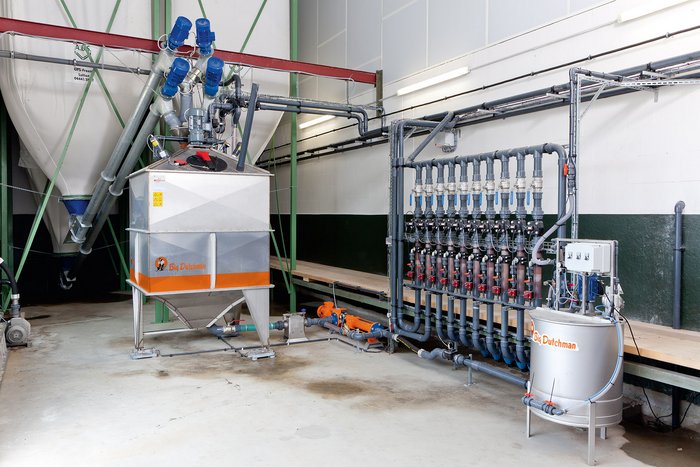
This system is suitable above all for compact houses with a short distance to the feed kitchen. The animals in each room are supplied with an individual feed line (dead line). With the MediInject, additives can easily be dosed into the dead lines.
For larger houses, it is advisable to combine a residue-free circuit with dead lines for each room. This shortens the length of the pipes and reduces the system's running time.
This system is especially suitable for smaller fattening houses with the feed kitchen inside the house.
1-tank system with used-water tank and JET line
With this system, a JET (separator body) is sent through the main line with the help of compressed air. After mixing, the JET is first introduced with the feed to the end of the dead line. The feed is then dosed and afterwards water is introduced until the entire contents of the pipe come out. This flushes the pipe at the same time. When feeding is finished, this water is pushed back with the help of the JET and compressed air into the used-water tank, where it remains available for another mix. The main line is left empty and clean. The short sub-lines remain full of feed.
The combination of a Jet line with dead sub-lines is a good system for fattening houses. The transport distances for the feed are short and few pipes are needed.
1-tank system with weighing of the used-water tank and residue-free circuit
With this system, the mixed feed is dosed residue-free at each meal. Since a previously weighed used-water tank is used, there are no pauses in the feeding process, as the used water does not need to be pumped into the mixing tank.
This system is ideal for sow farms.
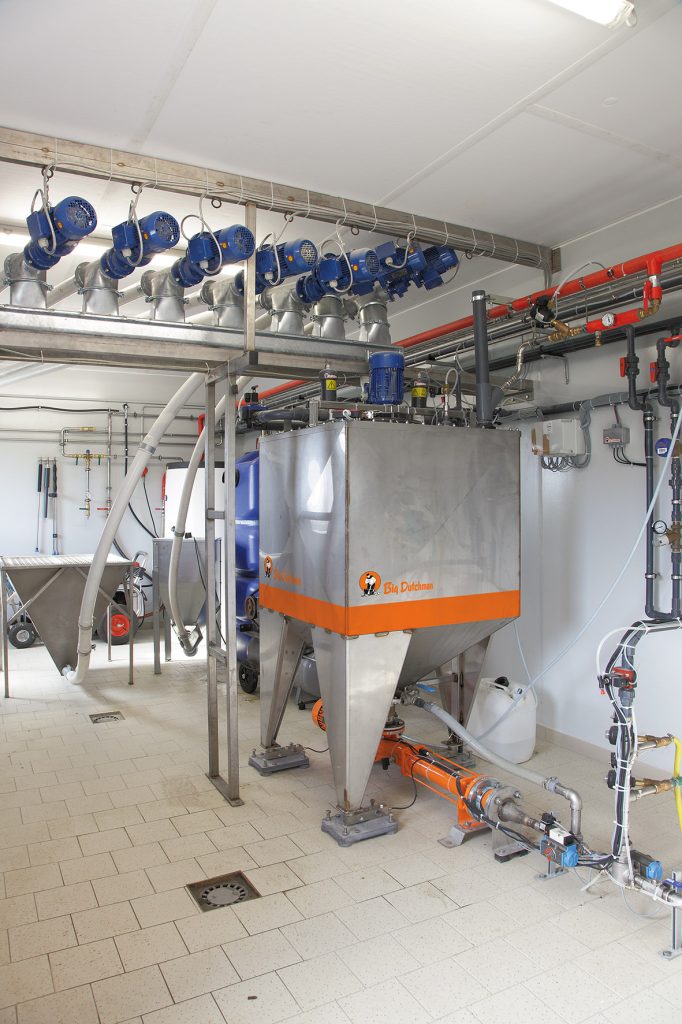
1- or 2-tank system as residue-free feeding with compressed air
This system is especially perfect for feeding weaner piglets from a weight of 6 kg.
The pipes are kept clean by means of compressed air. It is not necessary to use water as a transport medium.
Frequent dosing of small, and therefore fresher, rations spread throughout the day → high daily weight gain;
feed mixes with a notably higher dry-matter content can be offered;
any amount of hot water can be used to prepare the mix;
residue-free feed dosing → no residues remain in the feed pipes;
use of vitamins or minerals without delay;
feed mixes of up to 48 components can be prepared → great flexibility in the use of economical feeds;
optimal adaptation of the feed composition to the piglets' needs →multiphase feeding for a smooth, gradual change of feed;
optimal feed hygiene and, with it, healthy piglets;
possibility of installing the valves outside the room → no electrical installation in the room.
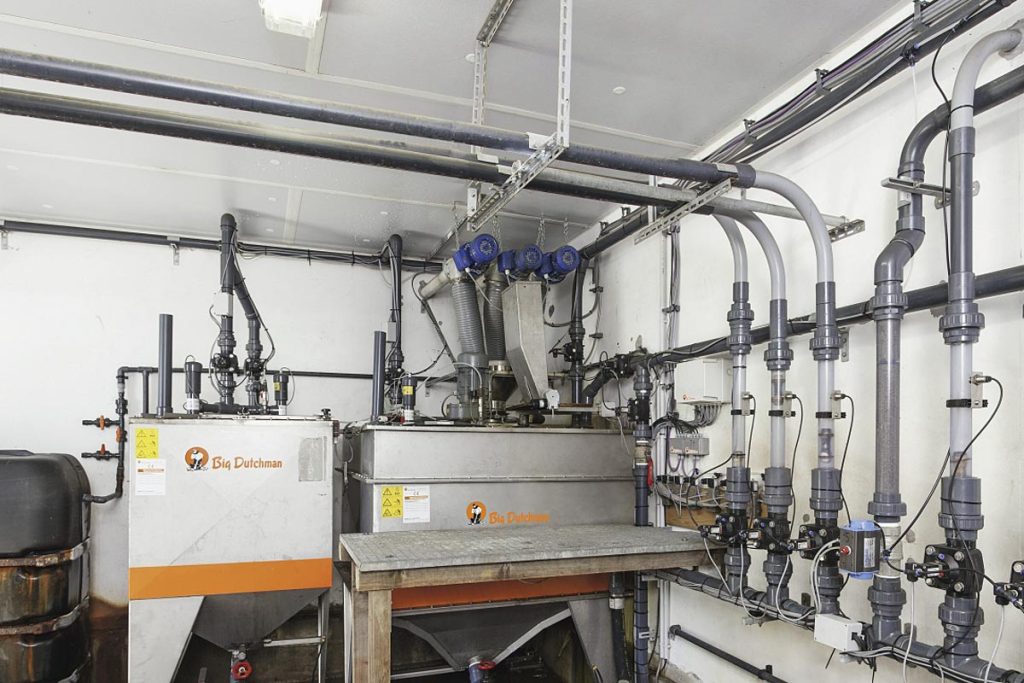
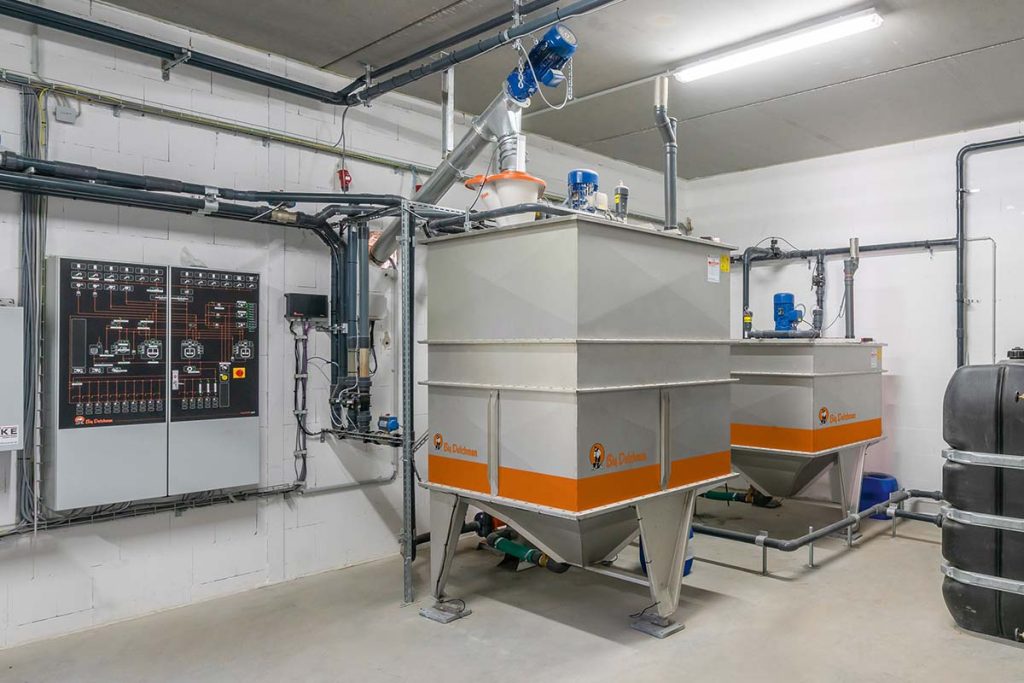
2-tank system: two mixing tanks and one used-water tank
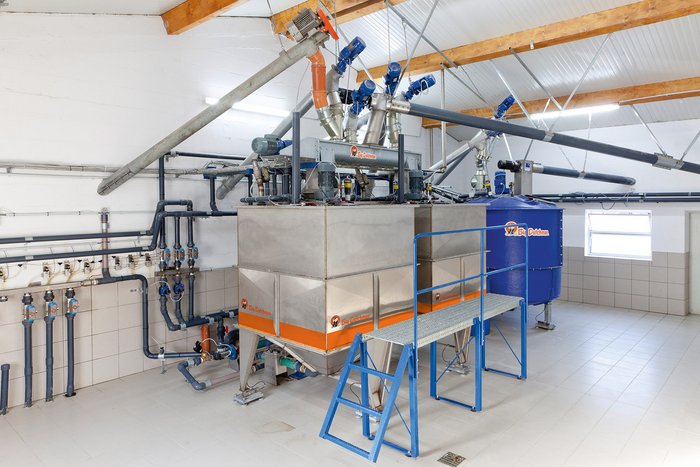
In this system, two tanks work simultaneously as a mixing tank and a feeding tank. The total amount of feed required is divided into several batches. While the feed is being mixed in one tank, the contents of the second tank are dosed at the same time. In other words, the system allows you to mix and feed at the same time.
Between feedings with different mixes, there are no waiting times. The system can be designed as residue-free feeding (with circuits or JET lines).
Larger groups of animals can be fed quickly and with many different recipes.
SwapTank system: 1-tank system with used-water tank as residue-free feeding
This system requires no additional used-water tank. Depending on the amount of feed needed at the time, both tanks function as a mixing tank or a used-water tank. Due to the difference in tank size, quantities from very small to very large can be mixed, depending on the amount of feed needed at each moment. After polling all the troughs via sensor, the control computer decides which tank is used.
With this system, the different needs that arise above all in closed or combined production systems can be met easily.
Efficient feeding strategies in pig management
Key advantages:
Máxima relación animales/lugares de alimentación 3:1 → better use of space in the house;
needs-based feeding according to the feeding curve;
the sensor indicates whether the trough is full or empty;
frequent supply of small, freshly mixed rations;
pens with flexible shapes, of interest when renovating houses;
feeding-period control →automatic adjustment of the feed amount according to the animals' appetite.
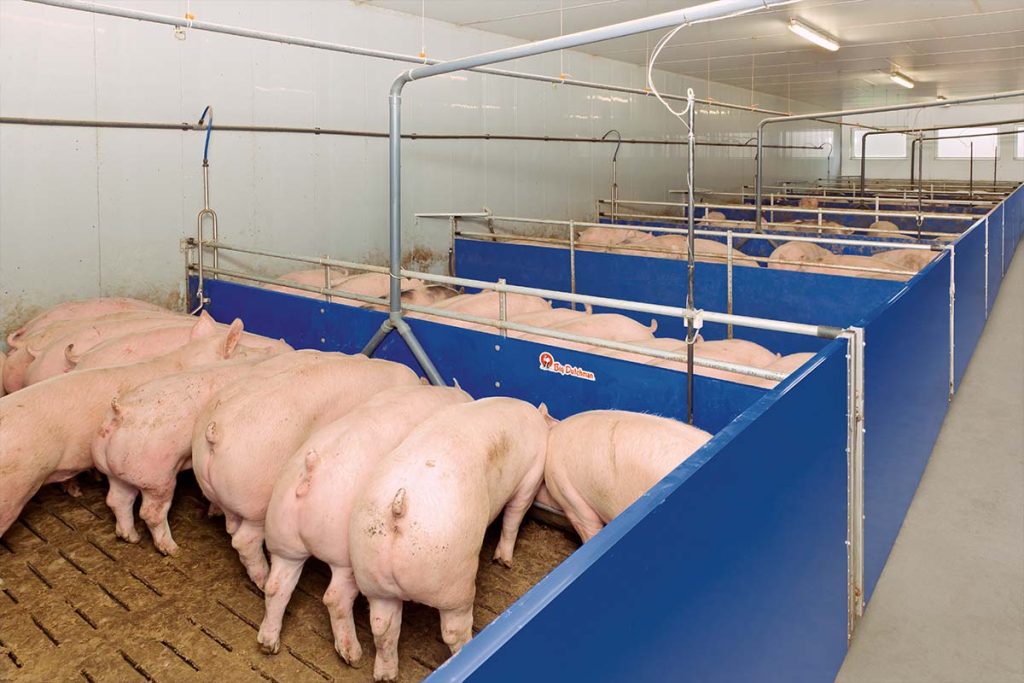
Restrictive feeding by controlling the feeding period
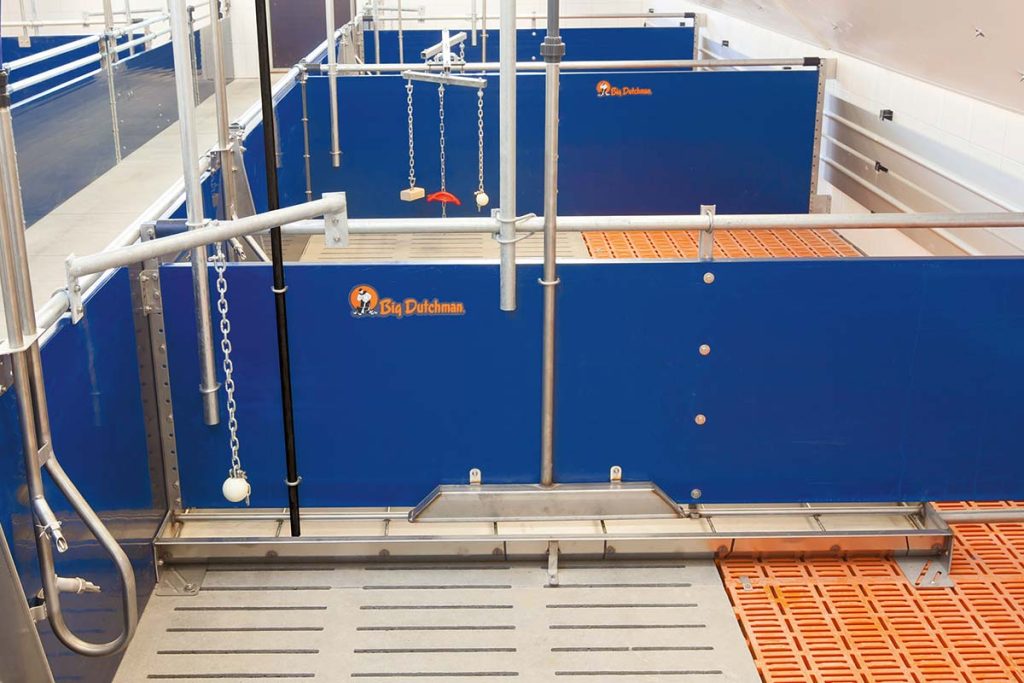
En la alimentación restrictiva se ofrece alimento en el comedero longitudinal de dos a cuatro veces al día. La relación animales/ lugares de alimentación es 1:1. Como en los momentos de alimentación los animales acuden al comedero, el granjero puede entonces controlarlos adecuadamente. Los animales que no están en el comedero pueden marcarse fácilmente y durante un tiempo se les observa o se les aporta el tratamiento que necesiten.
In addition, a sensor can be installed that records the duration of the feeding period and transmits this data to the control computer. If the trough empties very quickly, the next feed ration is automatically increased. If feed remains in the trough for longer, the ration is reduced.
Sensor feeding
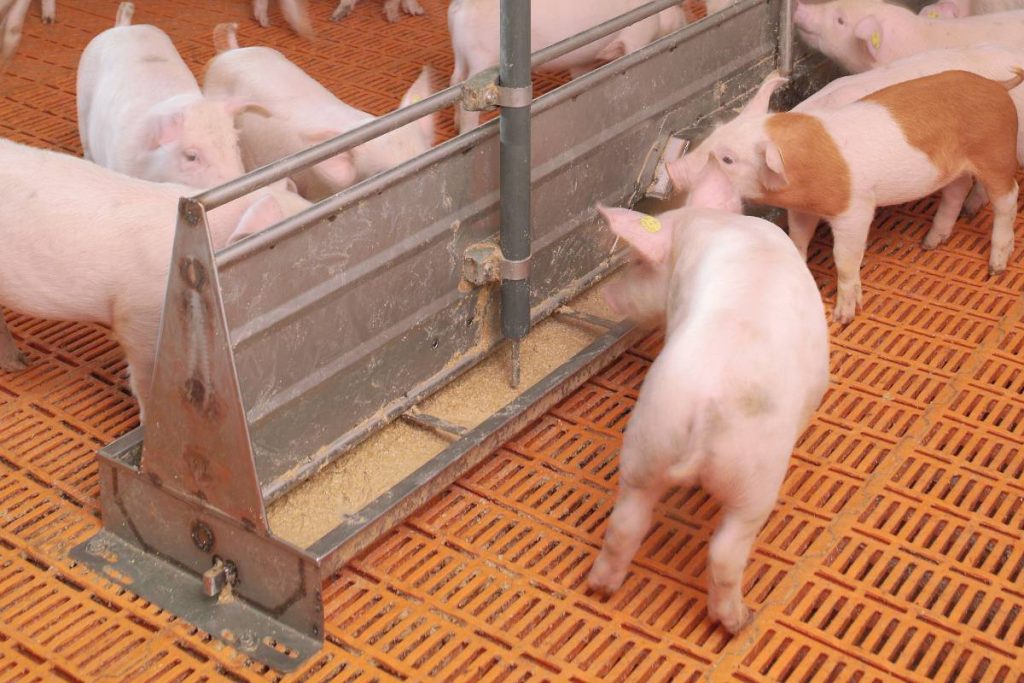
En la alimentación con sensor en el comedero corto se registra si se ha vaciado el comedero o no. Con este sistema se puede aplicar una relación animales/lugares de alimentación de 3:1. Esto ofrece ventajas para la optimización del espacio en la nave. Además, los sensores del comedero ayudan a alcanzar unos resultados de alimentación óptimos.
A sensor bar (made of stainless steel) is installed on the trough floor. In troughs up to 3.50 m long, one sensor is used. It measures whether there is a conductive connection between the sensor bar and the trough through the feed. If there is none, the sensor indicates «empty» to the computer. This happens at individually adjustable intervals. Even with sensor feeding in the short trough, feeding-period control is possible and advisable.
Download the datasheet
Check the technical specifications, features and product details in PDF format.